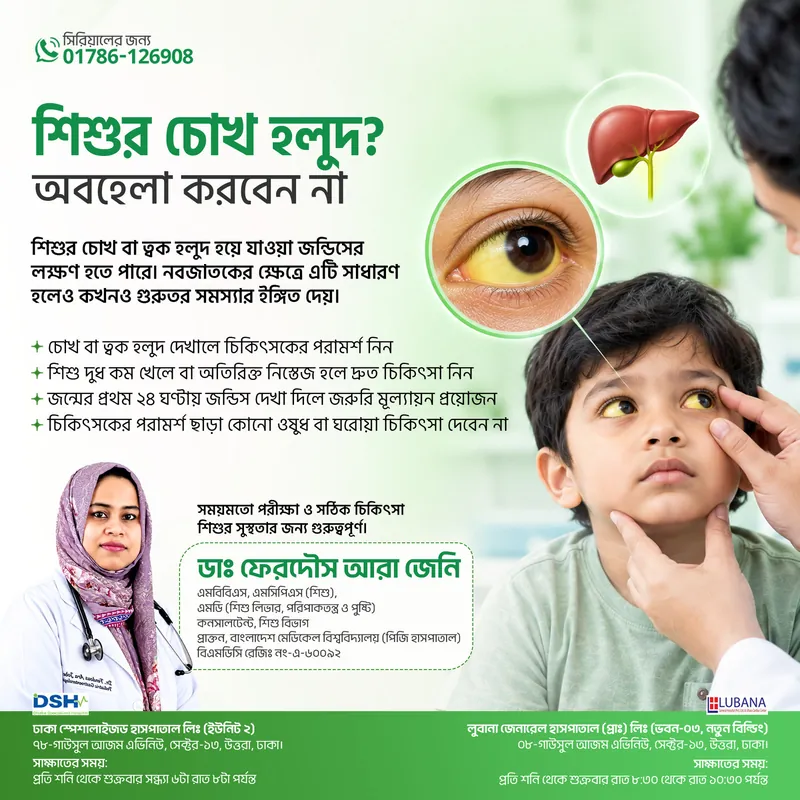
When bile cannot flow properly from a baby's liver into the gut, the result is "cholestasis": prolonged jaundice, dark urine and pale stools. One important cause, biliary atresia, has the best outcome when surgery is done in the first weeks of life — so speed matters. Dr. Jenny has published case reports on infants with exactly these problems, including a choledochal cyst and a bile-duct stricture that mimicked biliary atresia.
Signs parents notice
- Jaundice lasting beyond 2 weeks
- Pale yellow, white or clay-coloured stools
- Dark urine
- A firm, enlarged liver or a swollen tummy
- Poor weight gain, or bleeding due to low vitamin K
Common causes
- Biliary atresia
- Choledochal cyst and other bile-duct malformations
- Neonatal hepatitis, infections and metabolic disorders
- Genetic cholestasis syndromes
How Dr. Jenny evaluates & treats
- Urgent conjugated bilirubin and liver tests
- Stool-colour review and abdominal ultrasound
- Vitamin K and fat-soluble vitamin support while tests are underway
- Prompt referral to paediatric surgical and hepatology teams when surgery is likely
- Nutrition planning with special formula when fat absorption is poor
When to see a doctor
- Any pale stool in a baby — do not wait
- Jaundice beyond 2 weeks
- Bleeding from the umbilicus, nose or skin bruises in a jaundiced baby
Serial: 01786-126908 · In an emergency, go to the nearest hospital emergency department.
Watch: Dr. Jenny explains
Jaundice & liver
শিশুর পায়খানা সাদা বা ফ্যাকাশে? এই সতর্ক সংকেতটি অবহেলা করবেন না!
Pale or white stool — a warning sign not to ignore
Watch on YouTubeJaundice & liver
শিশুর জন্ডিসের লক্ষণ ও চিকিৎসা | নবজাতকের জন্ডিস কি স্বাভাবিক?
Jaundice in babies — when is it normal?
Watch on YouTubeFrequently asked questions
Why is a pale stool so important?
Normal baby stool is yellow or green because of bile. A pale or white stool can mean bile is not reaching the gut — a sign of a blocked or absent bile duct that needs urgent evaluation.
This page gives general information for parents and is being reviewed by Dr. Ferdous Ara Jenny. It does not replace a consultation — every child is different.